Why We're Moving Away from Strapi: Lessons Learned from Real-World Experience

When we started the Rekenen Doe Je Zo project, Strapi seemed like the perfect solution for our content management needs. A headless CMS with a modern interface, extensive customization options, and a growing ecosystem. What could go wrong?
After months of working with Strapi 4, we've learned that sometimes the most promising tools can become the biggest roadblocks. Here's our honest experience and why we've decided to move away from Strapi for future projects.
The Promise vs. Reality
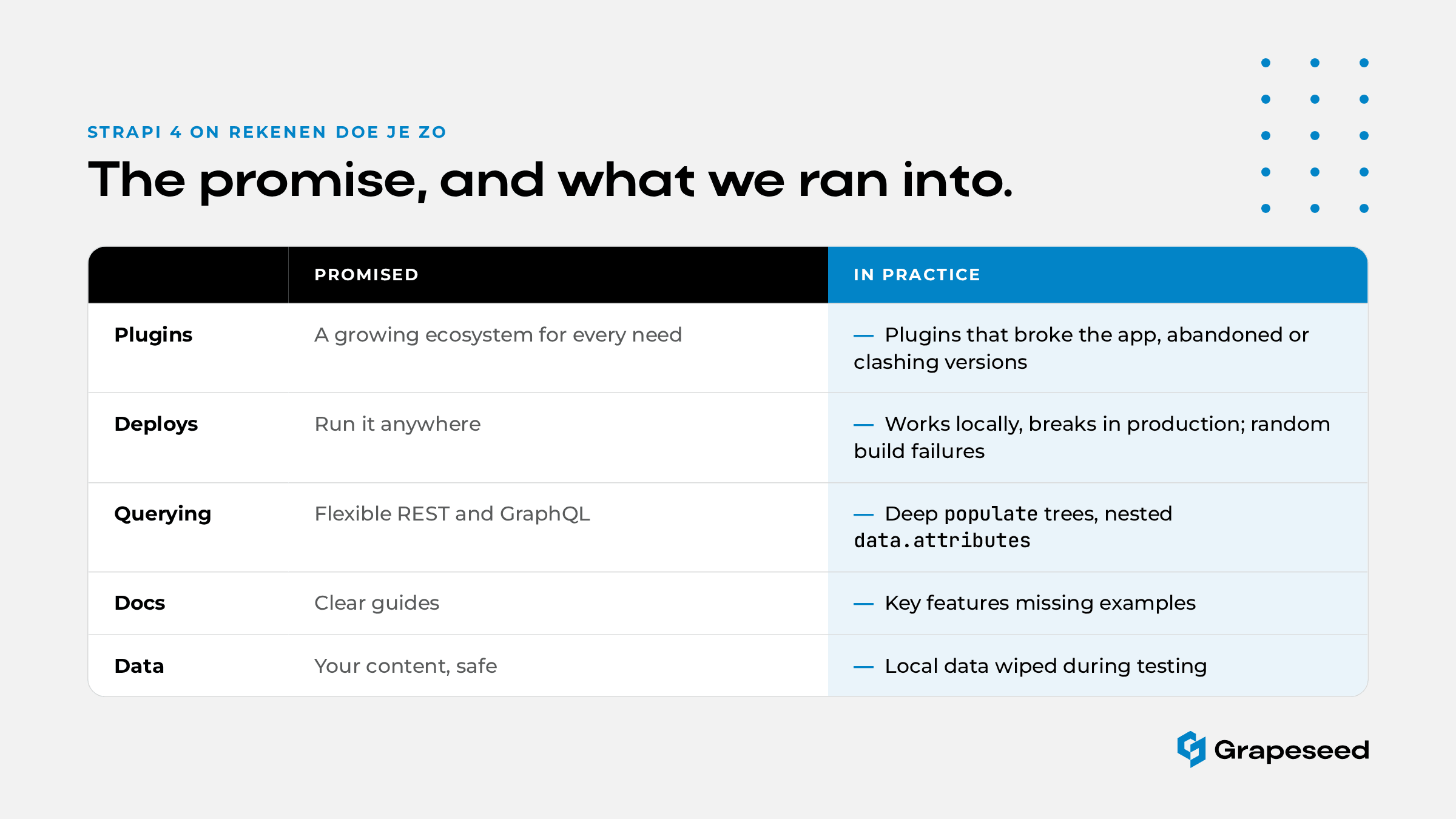
Strapi 4 promised a lot: better performance, improved developer experience, and a more stable plugin ecosystem. Unfortunately, our real-world experience told a different story.
Plugin Ecosystem Issues
One of Strapi's biggest selling points is its plugin ecosystem. However, we quickly discovered that many plugins simply didn't work as advertised:
- Compatibility nightmares: Plugins that claimed to support Strapi 4 would break our application
- Abandoned maintenance: Many popular plugins were no longer actively maintained
- Version conflicts: Different plugins required different versions of Strapi, creating dependency hell
Deployment Challenges
Deploying Strapi consistently proved to be more complex than anticipated:
- Environment inconsistencies: What worked locally often broke in production
- Configuration complexity: Managing different environments required extensive configuration files
- Build failures: Random build failures that were difficult to debug and resolve
Documentation and Querying Nightmares
Perhaps our biggest frustration was with Strapi's documentation and querying system:
- Incomplete documentation: Critical features were poorly documented or missing examples
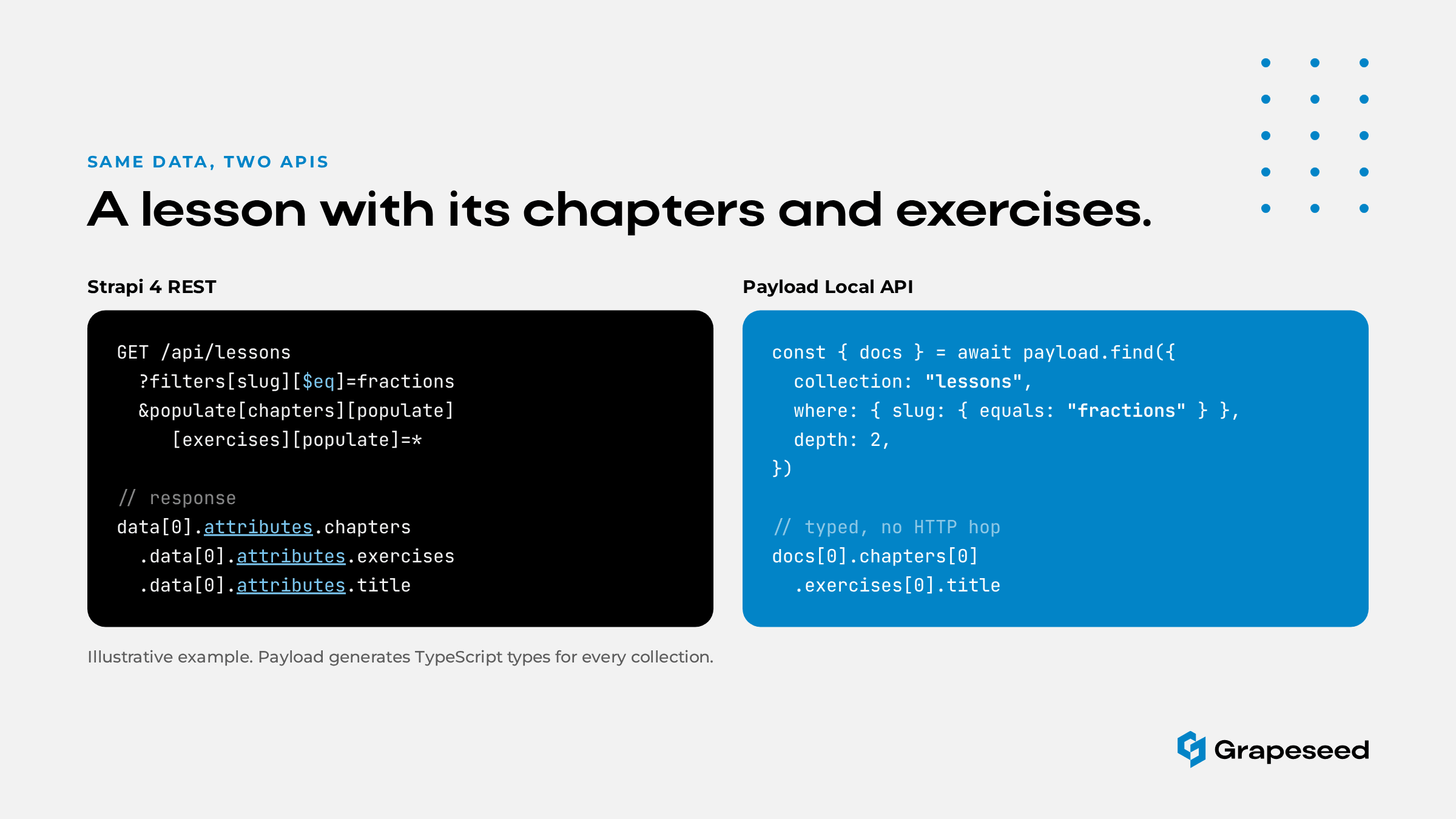
- Complex query syntax: Simple data retrieval required overly complex query structures
- Inconsistent API responses: The REST API would sometimes return unexpected data structures
Data Loss and Testing Issues
The final straw came when Strapi would randomly delete our local data during testing. This wasn't just inconvenient; it was a serious reliability concern that made us question using Strapi in production environments.
Our Workaround: Leaning on Next.js
Instead of fighting with Strapi, we found ourselves increasingly relying on Next.js features:
- Static generation: Using markdown files and Next.js static generation for content
- API routes: Building custom API endpoints instead of relying on Strapi's generated APIs
- Built-in optimizations: Leveraging Next.js's built-in image optimization and performance features
Moving Forward
While Strapi isn't inherently bad, it wasn't the right fit for our development workflow and project requirements. For the Rekenen Doe Je Zo project, we ultimately delivered a successful platform, but it was despite Strapi, not because of it.
For future projects, we're exploring alternatives that offer better reliability, clearer documentation, and more stable ecosystems. Sometimes the best technology decision is knowing when to step back and choose simplicity over complexity.
Key Takeaways
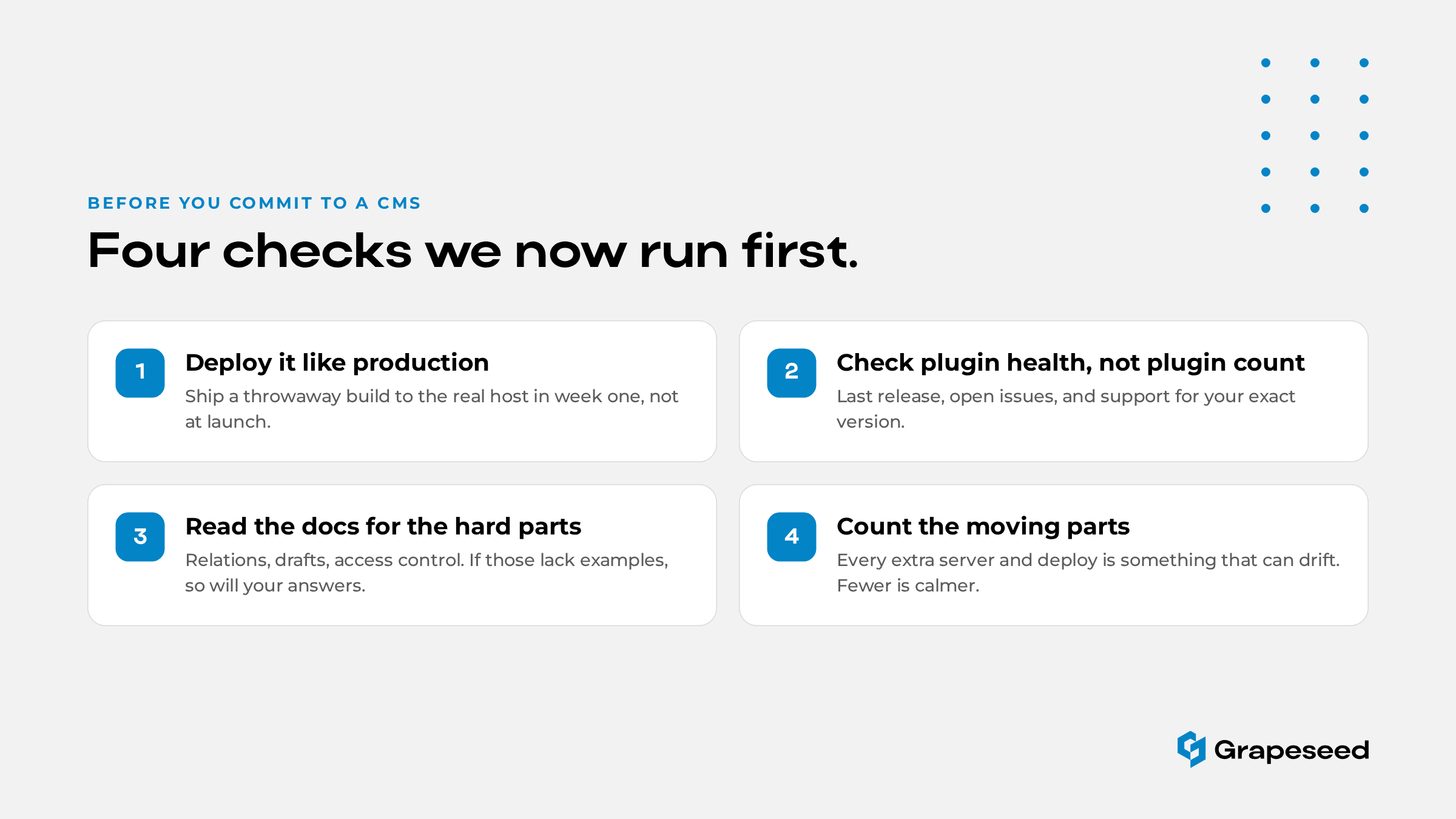
- Test thoroughly in production-like environments before committing to a technology stack
- Evaluate the plugin ecosystem's stability, not just its size
- Documentation quality is as important as feature completeness
- Developer experience matters. If you're fighting your tools, they're probably not the right tools
Every project teaches us something new. Our experience with Strapi has reinforced the importance of choosing technologies that enhance our development process rather than hinder it.
Want to see how we overcame these challenges? Check out our detailed case study of the Rekenen Doe Je Zo project to learn more about our problem-solving approach.
Ready to create something amazing together?
Get Started Today